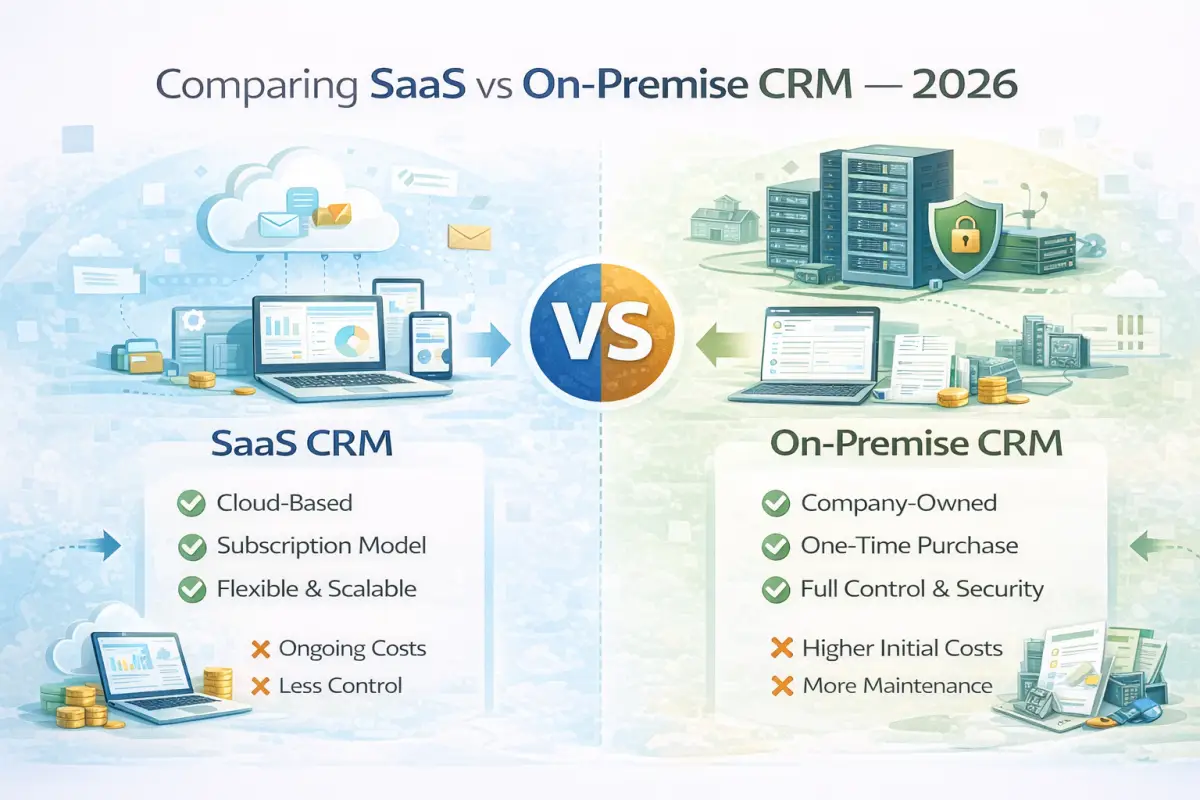
Comparing SaaS and On-Premise CRM Solutions for 2026
In the fast-paced world of business, choosing the right customer relationship management (CRM) system is vital. As we move into 2026, organizations must weigh the merits of Software as a Service (SaaS) against traditional on-premise CRM systems. Each option has its unique features, benefits, and drawbacks that can significantly influence a company's operations. The right choice largely depends on a variety of factors including company size, budget, and specific business needs.
Understanding SaaS CRM
SaaS CRM is a cloud-based solution that allows organizations to manage customer interactions through the internet. This model provides flexibility and ease of access from anywhere with internet connectivity. Users subscribe to the service, which means they do not have to invest in extensive hardware or infrastructure. The software is maintained and updated by the provider, relieving businesses of the burden of system upkeep.
One of the standout characteristics of SaaS CRM is its scalability. Companies can easily adjust their subscription plans as they grow, adding more features or users as needed. This adaptability makes SaaS appealing to startups and small-to-medium enterprises looking to expand without significant upfront costs.
Key Features of SaaS CRM
- Cloud accessibility
- Automatic updates
- Subscription-based pricing
- Integration with other cloud services
Pros of SaaS CRM
- Lower initial investment
- Quick deployment
- Regular updates without additional costs
- Accessible from multiple devices
Cons of SaaS CRM
- Ongoing subscription fees
- Dependence on internet connectivity
- Limited customization options
- Potential data security concerns
Understanding On-Premise CRM
On-premise CRM systems are installed directly on a company's servers. This traditional setup gives businesses full control over their data and software. While it may require a higher upfront investment in hardware and licenses, some organizations prefer this model for its perceived security and customization capabilities.
On-premise systems can be tailored specifically to the needs of the organization, allowing for greater flexibility in how features are implemented. This is particularly advantageous for businesses that operate in niche markets or have unique requirements that off-the-shelf software cannot meet.
Key Features of On-Premise CRM
- Complete data control
- Customizable software solutions
- Ability to work offline
- Potentially lower long-term costs
Pros of On-Premise CRM
- Enhanced security control
- Greater customization capabilities
- One-time licensing fees
- Offline access to data
Cons of On-Premise CRM
- High initial costs
- Longer setup time
- Maintenance responsibilities fall on the organization
- Requires IT staff for management
SaaS vs On-Premise CRM: Side-by-Side Comparison
| Feature | SaaS CRM | On-Premise CRM |
|---|---|---|
| Cost | Lower initial costs, ongoing subscriptions | Higher upfront costs, potential long-term savings |
| Accessibility | Accessible from anywhere with internet | Limited to in-house networks unless configured otherwise |
| Maintenance | Managed by provider | Managed by the organization |
| Customization | Limited | Highly customizable |
| Security | Dependent on provider | Full control over security measures |
Factors to Consider When Choosing Between SaaS and On-Premise CRM
When deciding between SaaS and on-premise CRM, several factors should be evaluated. First, consider your budget. SaaS typically requires less upfront investment, making it attractive to smaller businesses. However, over time, subscription fees can accumulate.
Next, think about your team’s technical capabilities. On-premise systems often require IT staff to manage and maintain them. Companies without this expertise may find SaaS more suitable, as it reduces the need for in-house technical support.
Data security is another critical consideration. Some businesses, particularly in regulated industries, may prefer on-premise solutions for better control over sensitive information. Others may trust SaaS providers that offer robust security measures and compliance with industry standards.
Industry Trends in 2026
As we look ahead, the trend in CRM solutions is leaning towards increased cloud adoption. Many businesses recognize the advantages of flexibility and remote access that SaaS provides. This trend is especially prominent in Tier-1 markets like the US, UK, Canada, and Australia.
Additionally, integration with AI and automation tools is becoming more common. SaaS platforms are increasingly incorporating these technologies, enabling companies to enhance their customer engagement efforts. On-premise solutions are also evolving but may lag in adopting rapid technological advancements.
Conclusion
The choice between SaaS and on-premise CRM solutions is not straightforward. Each has its strengths and weaknesses that cater to different business needs. To make the best decision, consider your company’s size, budget, and specific requirements. The landscape in 2026 shows a strong inclination towards SaaS, but for some organizations, on-premise remains a viable option.
FAQs
1. Which CRM is more cost-effective for small businesses?
SaaS CRM is often more cost-effective for small businesses due to lower initial costs and flexibility in scaling as they grow.
2. Can On-Premise CRM be accessed remotely?
While primarily designed for local access, on-premise CRM can be configured for remote access, but it requires additional setup and security measures.
3. Are SaaS CRMs secure?
Many SaaS CRMs provide strong security measures, but businesses should evaluate the provider's security protocols and compliance with regulations.
4. Which CRM is better for highly regulated industries?
On-premise CRM may be better for highly regulated industries due to greater control over data security and compliance.
5. Can SaaS CRMs scale easily as a business grows?
Yes, SaaS CRMs are designed to scale easily. Businesses can add features and users as needed without significant upfront costs.