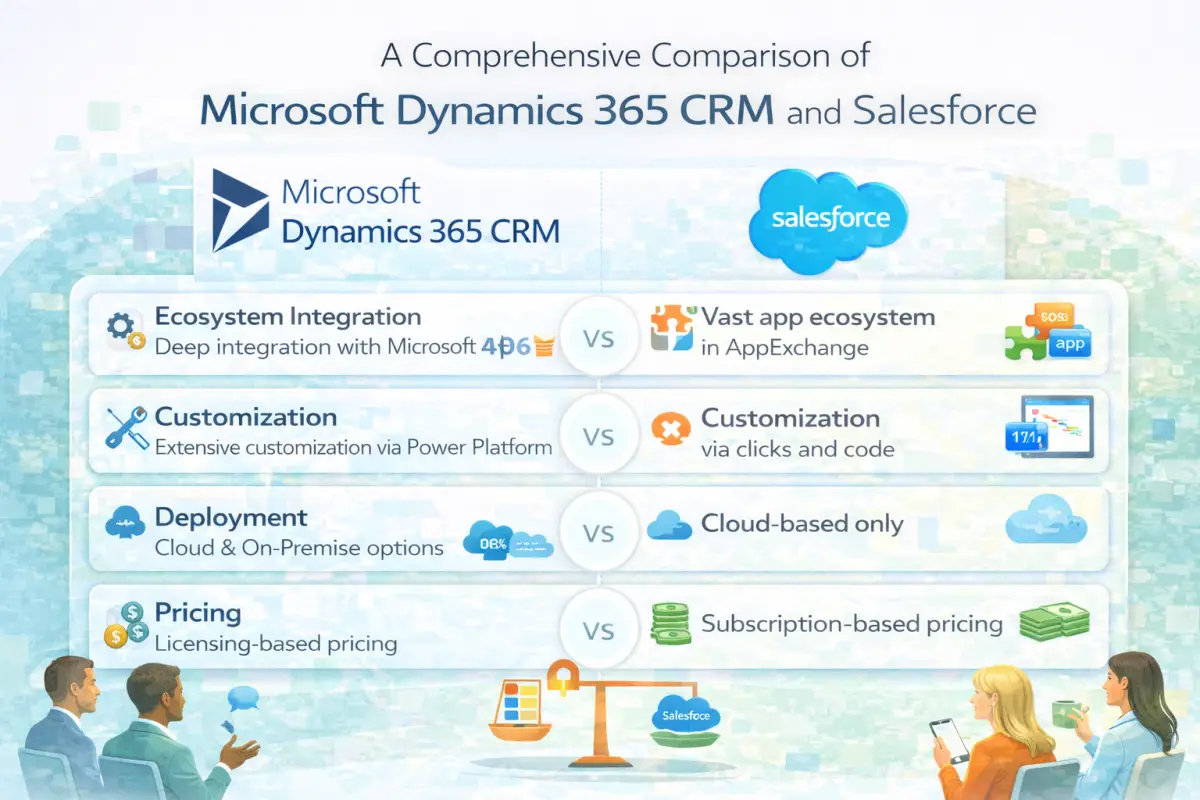
A Comprehensive Comparison of Microsoft Dynamics 365 CRM and Salesforce
1. Introduction
As businesses seek to enhance their customer relationships, choosing the right customer relationship management (CRM) software is critical. Microsoft Dynamics 365 CRM and Salesforce are two leading platforms that offer robust solutions. This article will explore their features, pricing, and more to help you decide which software is best for your organization in 2026.
2. Market Overview
The CRM market has expanded significantly, with numerous solutions available. Microsoft Dynamics 365 CRM offers integrated tools for sales, marketing, and customer service. Salesforce, on the other hand, is known for its cloud-based applications that cater to a wide range of business needs. Both systems are popular, but they serve different types of organizations depending on size and industry.
Dynamics 365 is often favored by enterprises already using Microsoft products, while Salesforce attracts businesses looking for flexibility and a vast array of third-party apps. Understanding the market landscape is essential for making an informed choice.
3. Pricing Comparison
The cost of CRM software can vary based on features and user requirements. Microsoft Dynamics 365 typically offers competitive pricing, with a subscription model that allows businesses to pay for only what they need. This can be advantageous for smaller companies or those just starting with CRM software.
Salesforce also uses a subscription-based model but can become expensive as additional features are added. The pricing structures of both platforms cater to different budgets, so it’s wise to evaluate your specific needs before committing.
4. ROI & TCO (Total Cost of Ownership)
When investing in CRM software, it’s important to consider the return on investment (ROI) and total cost of ownership (TCO). Microsoft Dynamics 365 can yield a favorable ROI due to its integration with other Microsoft tools, streamlining processes and reducing training time. This integration can lead to higher productivity and lower operational costs.
Salesforce, while potentially more expensive, offers extensive customization and scalability. Businesses that can leverage these features often see substantial long-term benefits. Analyzing the ROI and TCO for both options can help businesses understand the true value of their investment.
5. AI & Automation Features
Both Microsoft Dynamics 365 and Salesforce have incorporated artificial intelligence and automation into their platforms. Dynamics 365 features AI-driven insights that assist in lead scoring and customer engagement, helping sales teams prioritize their efforts effectively.
Salesforce also excels in this area, providing automation tools that streamline workflows and improve communication across teams. The choice between the two may depend on how deeply integrated you want AI features to be within your existing processes.
6. Security & Compliance
Data security is a top priority for CRM users. Microsoft Dynamics 365 offers robust security measures and compliance with various industry standards. This makes it suitable for companies in highly regulated sectors.
Salesforce also places a strong emphasis on security, with features like data encryption and user authentication. Assessing the security protocols of each platform is vital, especially for businesses handling sensitive information.
7. Industry Use Cases
Different industries may benefit from specific features within CRM platforms. Microsoft Dynamics 365 is often selected by organizations in finance and manufacturing due to its extensive reporting and analytics capabilities. These features support detailed tracking of customer interactions and sales performance.
Conversely, Salesforce is popular among service-oriented businesses, such as retail and hospitality, due to its flexibility and customer engagement tools. Identifying your industry’s unique requirements can guide your decision between these two CRMs.
8. Integration Ecosystem
Integration capabilities are essential for a CRM’s effectiveness. Microsoft Dynamics 365 seamlessly integrates with other Microsoft products like Office 365 and Power BI, making it a natural choice for businesses already using those tools.
Salesforce boasts a vast app marketplace, allowing users to customize their experience with numerous third-party integrations. Depending on your existing software ecosystem, integration can be a decisive factor in your CRM selection.
9. Pros & Cons
Both Microsoft Dynamics 365 and Salesforce have their advantages and drawbacks. Dynamics 365 is known for its strong integration with Microsoft products and cost-effectiveness, but it may lack some of the customization options available in Salesforce.
Salesforce, while powerful and flexible, can be costly and complex to navigate for new users. Weighing the pros and cons of each platform can help clarify which solution aligns best with your business goals.
10. Final Verdict: Which CRM Should You Choose?
Choosing between Microsoft Dynamics 365 CRM and Salesforce ultimately depends on your organization's specific needs and existing technologies. If you prioritize cost, integration with Microsoft tools, and ease of use, Dynamics 365 may be the better fit.
On the other hand, if customization, scalability, and a rich app ecosystem are your top priorities, Salesforce could be your ideal choice. Understanding your business requirements will lead you to the right decision.
11. Conclusion
In the end, both Microsoft Dynamics 365 CRM and Salesforce offer powerful features for managing customer relationships. By examining their strengths and weaknesses, you can make a choice that will support your business’s growth in the years to come. Make sure to evaluate your specific needs, budget, and long-term goals to find the best CRM solution for your organization in 2026.